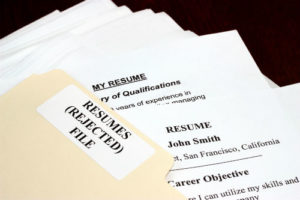
Do you want to know a secret about resumes and cover letters? Employers sometimes put more emphasis on a cover letter than they do a resume, so not focusing on yours can significantly reduce your chances of landing a job. It’s easy to spend a lot of time crafting your resume and not focus on the other important aspects of a job application. An executive resume cover letter gives an HR manager a glimpse of who the person really is behind a resume, so it deserves some time and attention. Another good reason for a cover letter is that even though you hear that many recruiters don’t read them, there are also many recruiters that WON’T read your resume without a cover letter. Here are some other reasons why your cover letter is important.
Cover Letters Make You Stand Out
Standing out is difficult to do when you think about the hundreds of resumes an HR manager has to sift through for any given job post. Your cover letter gives you the chance to fill in any blanks left in your resume, such as employment gaps, transitions, achievements or anything else. Instead of being a supplement to your resume, your cover letter should be an extension of it to tell your complete career story to your potential employer.
Cover Letters Show Your True Self
When writing cover letters for resumes, you have the opportunity to show your personality. Companies want to hire someone with the right skills and experience, but also someone who will fit culturally. Writing in a natural tone will show your true self and help an employer decide if you would be a good fit with the team. If it doesn’t seem like you would fit in well, then you’ll save time by not going to an interview or getting hired only to find out you simply don’t get along with your co-workers.
Sell Yourself With Your Cover Letter
Finally, your executive resume cover letter gives you the chance to sell yourself. You have a blank page to say whatever you want to about yourself, so don’t hold anything back. Let the employer know what you can offer them, how you’re best suited for the position you’re applying for and what your short-term and long-term goals are. Keep it concise, but get your point across clearly with the goal of making the HR manager impressed enough to want to meet you in person. Professional Resume Services is here to help write resumes and cover letters for executives searching for a new job. We focus on all the details of a job search and know exactly what recruiters are looking for in a cover letter. To learn more about how we can help you enhance any aspect of your job search, feel free to contact us at any time.
There are many experts analyzing the numbers to figure out the trends in the job market. One example from CareerBuilder has published their 2014 U.S. Job Forecast and it has both good news and bad news. Good news — the economy is improving and unemployment is at a five year low point. Bad news — Washington’s debt issues probably will keep hiring at a slow pace.
Of course, the experts are looking at huge amounts of data and the overall picture of the job market. They are crunching the numbers from every industry and profession to get the numbers on the charts and graphs that illustrate what they predict. But you are not looking for a job in every industry and profession, right? You want to know how all this data boils down to something that will help you get your next job.
This is where an expert who looks at the big picture but is being paid to distribute your resume focuses on those things that will do exactly that. I’m not talking about someone who does a canned blast to all the headhunters. That really doesn’t work all that well. What does work is a resume distribution that starts out by asking you –their customer– for 6 to 10 industry/positions/salary targets. Then a letter targeted to recruiters who meet your preferences and requirements is sent out in MS Word format to each one. After that, you get a Microsoft Excel file with the contact information on every recruiter who got that letter. This gives you the ability to follow up, track activities, etc. In fact, it’d be good to have the ability to send out that letter again within a month to keep you in the forefront of consideration.
This is exactly what Professional Resume Services’ Resume Distribution Service does. It is like getting out the magnifying glass and looking past the trends to find the job you are interested in.
The job search process can be long, boring, and more than anything, disappointing.You may spend hours searching the internet and newspapers, and will come up with almost nothing that sounds like the job you’re looking for. Which brings up another problem-do you even know what it is you are looking for? This aimless searching leads to wasted time, energy and disappointment.
Fortunately, you can make the job search easier on yourself if you take some time and decide what it is you want to search for. If you have an idea of what kind of job you want to do and a job that you would enjoy, then your search will be more fruitful and you will waste less time aimlessly searching. First, you need to decide what it is you want to do.Think about what you enjoy, what you know how to do, what you have been educated in, and where you want to be in your career. If you take the time to think through what it is you want, then you will be one step closer to getting a job and a career that you can enjoy. Next, as you begin your search, keep focused. You have decided what it is you want to do, so don’t stray from that path. If you do, you will only be wasting valuable time that could be spent on a targeted search. Use job search sites that have filter so you can search for specifics such as: full time, part time, education needed, distance from where you live, and the type of work.
If you know what you want to search for before you even begin the path to a new career, not only will you spend less time searching for a job, but the time you do spend searching will be more fruitful and you will be more likely to find a job you will love.
This is probably one of the most common questions job seekers face when creating a new resume.The traditional chronological resume can be daunting when there is a gap in employment. Knowing that you will have to explain the gap during an interview can be even more daunting. No worries! There are several ways to deal with this problem, and any expert resume writer can easily communicate your value regardless of whether or not you’ve been unemployed for a period of time.
Employers understand that there are numerous, legitimate reasons job candidates have gaps in their employment records. You might have taken time away from work to pursue an advanced degree, care for a sick family member, or even raise a family. No matter the reason, it’s best to use a resume format that will highlight your skills and downplay these gaps. Remember that just because you were not officially working, it doesn’t mean that you were idle and learning nothing. You want to play up these points as much as possible without focusing on the periods when you were not employed.
A closely related issue is where someone has had many jobs in a short period of time. This can make a candidate look unreliable when printed on a resume. Again, a resume that highlights skills over chronological employment is normally the best fit. It’s not uncommon for freelancers, technical support personnel, and other contract workers to have been contracted by several employers during a short period of time. What is important is making sure that your resume shows the expertise and skills you learned, as well as what accomplishments you’ve achieved in each job.
The best resume writers will focus the reader on a candidate’s skills and expertise, to the point that gaps and/or short contract jobs become a non-issue. If you are writing your own resume, you need to do the same. If you are having your resume professionally created, discuss the matter thoroughly with the writer and make sure that the best possible version of YOU shines through in the final product.
Believe it or not, there are actually some people who just have the knack for getting fired (I bet you can name a couple of people like that yourself!). Alternatively, there are others who never get fired. What is the difference between the two and which type are you? Companies today want to grow and they can’t do that if they have some people who are making it harder. So, they will get rid of them and replace them with those who bring something to the table and will help that company grow. There are certain types that companies will fire. They include:
The Naysayer – these types will always find a reason not to make a change, whether it’s for the better or not. They like the old phrase “if it ain’t broke, don’t fix it.”. Unfortunately, many past businesses thought like this, but they are no longer in business.
The Whiner – This type will always complain about a new duty or an overall office change. They are the ones who can breed discontent in the workplace by making statements such as “I don’t get paid enough to do that.” Ugh. The whiner will always be a negative in the workplace.
The Grouch – This person will know everything there is to know, know how to do it better, and try to tell everyone in the company how to do it better than they can themselves, even if it’s not in their area of expertise. They know how to do it all, just ask them.
Any of the above personality types will get fired eventually. They can take a company down pretty fast. If you are one of these types, change your attitude at work to one who is willing to go above and beyond the call of duty, be willing to make changes in the workplace, work overtime if necessary, just to name a few.
The economic times call for all employees to do what they can to help a business survive. The business, in turn, will keep working you so that you have money to put food on the table.
With the recovery finally on, people are looking for job options that will be around for while. So what kind of options do job seekers have when it comes to long-lasting careers and what type of careers should be avoided?
Job gains have averaged 125,000 per month but there are still industries that will take a tumble. So here are the industries you should shy away from: 1. Data processing and hosting services
Many of these jobs are being shipped overseas, so if you’re not a high-level IT professional, you should probably look for new employment options. Many companies practiced cost-cutting procedures so some of the jobs may stay here. 2. Apartment rental and home buyers
Apartment rental peaked in 2005 but with a wave of mergers and acquisitions among large apartment complexes, these jobs are being phased out. Lagging construction will keep the need for new apartments low until more apartment complexes are built. 3. United States Postal Service
The U.S. Postal Service has been usurped by email and competing companies such as FedEx and UPS. The post office is considering closing some offices and reducing staff to meet budget requirements. This is on top of the 147,000 jobs that have been cut since 2007. 4. Soft drink companies
This industry received a wealth of growth as new products were pushed to market, but now the same products are experiencing blow-back as the industry overgrew itself. It now seeks to pull back the reigns on existing products to make way for traditional drinks. 5. Wired Communication
As more companies go digital and the number of cell phone users increases, less wired services will be offered. This means a drop in the number of wired customers and an overall drop in the industry. Some phone companies are offering internet service in order to offset this, but the gains will be minimal.
With 9% unemployment nationwide being the new norm, people are looking at other industries to find work. They may not have experience in their new industry, but you go where the opportunities are.
So what new industries are open to American job seekers? Some may surprise you. 1. Green Technologies
Managing, scientific and technical jobs abound. The key to getting these jobs is having a background in them, but any new industry will need accountants, marketing personnel and office workers. The industry may have changed but the need for office workers has not. 2. Services for the elderly and health care
With so many people approaching retirement, or way past, the health care sector has never looked more promising. Those babyboomers are going to need someone to assist them with their services. These include health care cost, nursing homes and finding work for the elderly, who are still working late into their 70s and 80s. 3. Speech therapist and physical rehabilitation workers
The third fastest growing industry also deals with health. But this time it’s helping people recover from injury or developing needed parts of speech. More children are diagnosed with speech impairments now than ever. This requires people knowledgeable in dealing with these ailments. 4. Data processing, web hosting and online services
As the world changes, so does the way that we receive and send information. With almost everyone using the internet as the chosen medium of communication, more people are needed to man the ever increasing data stream. These people range from data processors to people with capabilities maintaining existing infrastructure. Improvements are needed as well, so expect this segment to grow. 5. Computer design and related services
Designing user interfaces that work with existing data streams will become even more important as new programs are needed to help workers diagnose problems and troubleshoot.
If you are looking for work, don’t just limit yourself to only the industry you are comfortable in. Revisit your resume, look at your skillset and see what other opportunities are out there for someone with your qualifications and experience.
Find Out Why You Were Rejected from a Job with These Tips
Leaving an interview knowing that you did not do everything in your power to get it can be demoralizing. But, it’s also a learning experience. What went wrong? How can I correct this problem? What is holding me back?
There are some things you should examine about your resume and how you showcase yourself. Here are some tips to updating your resume and getting that job interview to go in your favor. 1. Include your contact information whenever you send out emails. A quick fix, adding an email signature. 2. Forgetting to attach your resume or documents to your emails. As soon as you write, “attached” make sure you attach the document. Gmail actually has a function that asks if you want to attach something when you write “attach”. 3. Sending an email before you’re ready. Try sending it to yourself before sending it to HR managers. This way you can proof your email and make sure that it’s exactly what you want to send. 4. Leaving odd, incomplete or incoherent phone messages. Nothing sounds worse than being rushed or fumbling through your words as you leave a message, “”Umm, Hi. What? Oh, Hi, this is John…” What if the voicemail server doesn’t have a redo function? Now you look a little silly. Speak slowly so that you can gather your words and leave a smart, coherent message. Leave your name at the beginning and end with your name and phone number. 5. Lying on your LinkedIn or Facebook profiles. Saying that you’re a consultant when you’ve been out of work for 2 years does not look good. People will think you’re employed and look over you for prospective positions. Instead, say that you’re looking for “new opportunities” or “a change of pace”. 6. Not telling people that you are looking for a job. Send an email to your friends and family and let them know that you’re actively seeking a job. You would be surprised at the amount of people who will come to you with new opportunities. Update your LinkedIn profile to let people know that you are looking for a job. The more people who know that you’re looking, the higher your chances of landing a job. 7. Forgetting to use your most current email address. Many people leave older email address on their resume and fail to check their mail as they move on to new servers. You can solve this problem by email all of your contacts from your new email address, as well as updating your resume with the most up-to-date information. Make sure your online profiles include your email address as well. 8. Check your email messages for grammar or spelling errors. Nothing is worse than crafting a thought out email, sending it and then realizing that you’ve misspelled “Marketnig”. It’s a dead giveaway that you do not possess the eye for detail you claim. Spell check before you send that message.