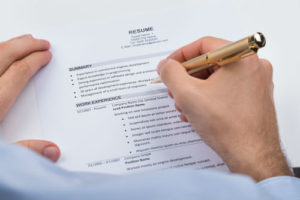
executive resumes

Executive resumes are special.

Don’t get me wrong-I’m not saying that executives are better than the rest of us, I’m just saying that executive resumes need a special touch, as an executive-level role entails a whole new level of responsibility.

If you are presenting an entry-level resume, what do you have? You might have a college degree. You likely have some work experience, but if you do, it is likely in an unrelated field. Then you have to ask if your experience and skills transfer. That can often be a challenge for resume writers, but it’s a common everyday challenge for professional resume writers.

Chances are, if you are seeking an executive position, then you are seeking it in the same company that you’ve worked in for a long time. At the very least, you are seeking an executive position within the same industry. That lends itself to scrutiny.

How well are your accomplishments and challenges laid out in your resume? Many times as our careers advance, we don’t capture them on paper, so start compiling your thoughts about these things on paper. Look through performance reviews if you need help remembering.

A good executive resume is defined as much by what you leave out as by what you put in. Careful thought must be put into every item on the resume. And that’s what makes it so special.

resume

What you need to remember is that when you come to apply for a job application your resume is their first impression of you. You might be the best person for the job but if your resume doesn’t showcase this in the right way, then you will seriously dent your chances of being successful.

One of the main things that you need to avoid is spelling mistakes and grammatical errors throughout your resume. You need to check and double check your resume to make sure that everything in it is correct. You will often find that even the simplest of mistakes will rule you out of the running for a job. Remember that it is likely a number of people will be applying for the same job so the person in charge of applications will be looking for reasons to take people out of the running – you want to make sure you don’t give them one!

Also make sure that your resume is precise when it comes to job experience and skills. You don’t want to be too general. You need to give them a reason to hire you so selling yourself is a must when it comes to your resume. Include information of previous jobs and the skills that these positions have taught you.

It can be tricky but try not to make your resume too general, or ‘one size fits all.’ If you are applying for different jobs, then you may need to tweak each version of your resume slightly to sell yourself for each of the different job types that you are trying. That way you can be sure that when you are applying for different job positions you know that your resume is as relevant as possible and gives you the best chance of success.

The presentation of your resume is also important. Along with it reading well and including the right information, you need to make sure that it is pleasing on the eye. Remember that they will be reading many different resumes so you need to make sure that yours stands out for all the right reasons. Keeping your resume clean and tidy, you want it to include all of the information that is needed without it being too cluttered and busy. Add a little color or  a graph of your recent sales numbers, etc. You need to give them a reason to read your resume and by making it look like hard work to read you are ruining your chances before you even start.

computer happy

I really like doing my work on a Mac, and if you are lucky enough to be able to choose your computer platform, showcasing your computer skills on your resume is an easy task. Whether you have a professional writer help you build your resume, or you choose to do it yourself,  getting familiar with how your word processing program works, quirks and all, on both platforms will make your life easier.

More employers operate on a PC platform than on a Mac platform. So if you are a Mac fan like me and looking for a job, getting to know both platforms will be a big plus. Unfortunately, Windows Vista was such a buggy system that many PC users like myself bailed out and bought a Mac. Fast forward to now. Windows 7 has been a relatively stable environment, and if you have been away for awhile, learning Windows 7 won’t be all that difficult. It builds on computer skills that you used when you were working in Windows XP. There are also apps that will allow you to run a stable Windows environment on a Mac if you really want to stick with your Mac computer. Don’t let an employer catch you unaware, however, if you are a diehard PC fan. Some employers do work exclusively on Macs, especially in design fields such as graphic design and packaging.

Knowing both platforms will help you in your job search. Be sure to list both on your resume if you are up-to-date on MAC and PC systems. If not, look online for free workshops. Windows has gotten much better at providing online training.  Apple recognizes that not everyone lives close enough to an Apple store to attend their free workshops, so much of that information is also online. Add any computer workshops you attended to your resume, as well as any computer certifications completed.

Make potential employers aware of your computer proficiencies by  listing programs and applications you use on a regular basis on your resume. Most position ads will tell you which programs are required or desired. Check the ad carefully, and make sure you list every program and app required with which you have experience.

Ask most employers which type of resume they like to see and you’ll get a lot of them telling you they prefer to see a chronological resume format. Do you know why?

The chronological resume is the preferred type because it shows how your career history has progressed from the beginning to present day. Employers want to be able to quickly see how many jobs you’ve had, as well as your tenure at each company. Employers want stable employees-after all, they are investing in you.

If a stable work history is important to the company interviewing you for your next job, then presenting a chronological resume will put you in the running for the position. Hiring managers want to see how you’ve advanced in your career, as well as the new skills acquired and accomplishments achieved in each position to see if your credentials are a good match for their company.

The chronological resume is a great format to use to show promotions and a steady career progression, whether within the same company or a new one. It’s the preferred resume format among the majority of the employers around the world.

professional resume

Whilst many people are happy to create their own resumes and are able to write a perfectly good resume, there are times when you have to go the extra mile. We know that the type of job that you have will make a big difference to the resume that you submit. It is important to make sure that your resume matches the job you are applying for.

There are times when a normal resume isn’t enough and this may be when it is time to consider professional resume creation. If you are going for a high flying job, for example, or one that is at the top of the career ladder, then you’ll want to make sure that your resume is up to the high standards that a job of this level would expect.

If you aren’t sure how to go about this, then you can contact a company to create a professional resume for you. There are different services and add-ons that you get with these services depending on who you go with for your resume creation and the package that you choose. Of course, you can expect a fantastic resume that sells all of your best bits, your skills and your experiences to make sure that they know who you are, why they should hire you and what you would bring to the table if they were to hire you.

On top of this you get a variety of other services including help with creating the perfect resume and even a digital copy of your resume which is going to allow you to email in your job application rather than post it.

resume

If you are applying for jobs but aren’t being successful, then it is time to look at where you could be going wrong. The job market is tough so if you aren’t doing what you can to beat the competition, then you are really ruining your chances of being successful.

There are several things that can help or hinder your job application success rates and if you are having problems in getting your dream job, then you need to look at these and how they can be improved.

One of the main things you need to look at is your resume and making sure that it does you justice. There are several ways that you can get hints and tips on how to have the perfect resume and the changes you can make to ensure that your resume is doing the best possible job for you.

However, when you are simply reading other people’s advice and trying to put that into place with your resume, it can be difficult. Knowing what your resume should be like and how to improve it is hard, but it is a vital step to job success.

If this is something that concerns you or you feel like you could do with help improving your resume, then why not get a professional on board? By getting someone who knows what they are doing to read over your resume and make any improvements that are needed, you are giving yourself the best chance of job success.

Steps To Success

In today’s current era of technology, social media, choppy economies, and 14-year-old executives, it pays to learn the job search process. Anyone, whether employed or not, can benefit from learning how to streamline the job search process.

With over 40,000 websites and companies competing to offer job search services, it is easy to get confused. Career websites are set up so that you can submit resumes electronically to businesses. Applying for jobs takes time, and landing one is really a numbers game. Almost all potential jobs can now be examined, located, and applied for from the comfort of your own home. Follow these simple steps to learn how to manage your time and resources in an effort to get more interviews.

Write Down your Goals. Before even writing a resume or applying, write down your goals. If you don’t write yours down, you will just be helping someone else achieve theirs. Decide what you want, write it down, and create a plan to get what you want.

Get a Resume and Cover Letter. Write your own or use a service. If you think about the cost/benefit analysis of purchasing a resume, it really makes sense to invest in a custom resume written by a professional. This could be the difference between two jobs and big salary differences. There are numerous experts that say a cover letter is imperative. Most resume services will write a cover letter with the resume you purchase. Then all you have to do is change the company and contact name in the letter. Another reason to use a professional resume service is because they know how to write resumes integrating all the right keywords in all the right places.

Research Companies. Research the companies for which you want to work. When interviewing it is always better to keep focused on the company and how you will benefit them. Don’t sell yourself short.

Get Organized. When you find a job of interest, be sure to make a list of their contact people and email them your resume directly if possible. If there is a phone number, pick up the phone and call the headhunter. Log everything. You never know when HR will call. You will look really good if you know something about the representative.

Submit your Resume. This is by far the most important step. Most of the time, jobs will find you, not the other way around on line at various job boards.

These five steps, if followed, will guide you to an interview. Always remember that your thoughts control your destiny. You have to be positive and patient. You can do it. Always remember, if you don’t respect yourself, no one else will.

Standing Apart From The Crowd

It’s funny how job titles have changed over the years. You know, titles like “nurse’s aide” are now called “patient care representative” and “janitor” is now called “sanitation engineer.” The newer job titles of the 1990s had all positions sound much more glamorous than they really were.

Other phrases that were popular on resumes in the ’90s were “team leader,” “coordinator,” “communication manager,” blah, blah, blah. Employers of today do not want to see those types of phrases on executive resumes. While you may very well have developed skills in these areas, it is important to word your resume a little differently so it won’t sound as boring as the other resumes.

Instead of using a catch-all phrase like the ones listed above, employers are now looking for pieces of information within your resume. You need to tailor your resume to be more specific about your skills and accomplishments.

For example, team leader. Detail what you were a leader of or what you coordinated. Not just the phrase “team leader.” It is important to be much more creative with resumes because that more than anything else will make your resume stand apart from the rest.

And with the job markets the way they are and more people competing for the same jobs, you have to have something on your resume that will catch the attention of a recruiter so they will stop and really read your resume.

Resources and resume examples are available for you to help you transform your resume into a completely new one – one that will stand apart from the crowd.


Due to the job markets lately, there are a lot of older generation employees wondering how to get hired. The key is recognizing and remembering that your work experience can play a supportive role as well as a leadership role with organizations. The two need not be mutually exclusive.

If you’re over 50, you’ve probably had the experience of being labeled as overqualified. And in response to this unwanted job-search slur, you’ve probably done what any intelligent, ambitious individual would do: Dumb yourself down on your resume.

A good move, but what does this do to your career confidence? If today’s market is telling you repeatedly in rejection emails that they are not concerned with your achievements, it’s no wonder your self esteem is shaky.

As an over 50 job candidate, you have a unique challenge to struggle with during the interview. Even though the interviewers are telling you that you are overqualified, you are suddenly feeling very inexperienced. This is because you’re overqualified because of the simple length of your resume, the style of your suit, color of your hair, and lingo in your business repertoire.

You’re under qualified because you may lack some understanding of today’s rapidly evolving technologies, flattened infrastructure, and business culture. Coming to terms with this before the interview is an essential component to building back your career confidence.

Be confident that you could do many of the job duties of the interviewer just as easily in the pre-computer generation. That doesn’t make you stupid. Many people couldn’t do a lot of jobs if it weren’t for computer programs helping them along.

Figure out your strengths and what you can bring to the table as far as being able take on a leadership role. It will still be a learning experience but we all have to learn something sometime. It’s important to know multiple aspects of your professional self prior to your job search, and it’s important to know how to present them to your next employer on paper and in person.

job skills list

What are transferable skills? They are the skills and abilities that transfer from job to job no matter which position you have held in the past. One of the things that make these skills so valuable is that they can be used in such a wide array of work settings. For instance, everyone needs problem solving skills, whether you are a general contractor or a financial analyst. That skill transfers from position to position regardless of what the job title is. How can this be used to benefit your resume and your job search in general? When you create or revise your resume, there are a number of things to consider.

The first and most important consideration is how you are going to ensure that your resume specifically speaks to the prospective employer’s needs. This could be if you are qualified to do the job, can you get along well with people, mutually agreed on salary and will you stay with the company.

As is true with all aspects of writing a resume, each and every word on your resume should be tailored to the position you are applying for. If you are seeking a job as a computer programmer, you probably will not want to list your public speaking ability. You would, however, want to emphasize your ability to organize, plan and/or work well under pressure. Each job has certain qualifications that are best suited to it.

Job duties may differ from job to job, but there are a myriad of skills needed that transfer well from one to another. Being able to identify and clearly relate those transferable skills to a prospective employer is a huge benefit to you. When you can incorporate these transferable skills into your resume and cover letter, you will be making the job of a hiring manager much easier. He or she will see that you have a lot to offer that will be over and above your specific job qualifications.